7 Things That Made JTeles the Number One Cloth Farmer in Rust
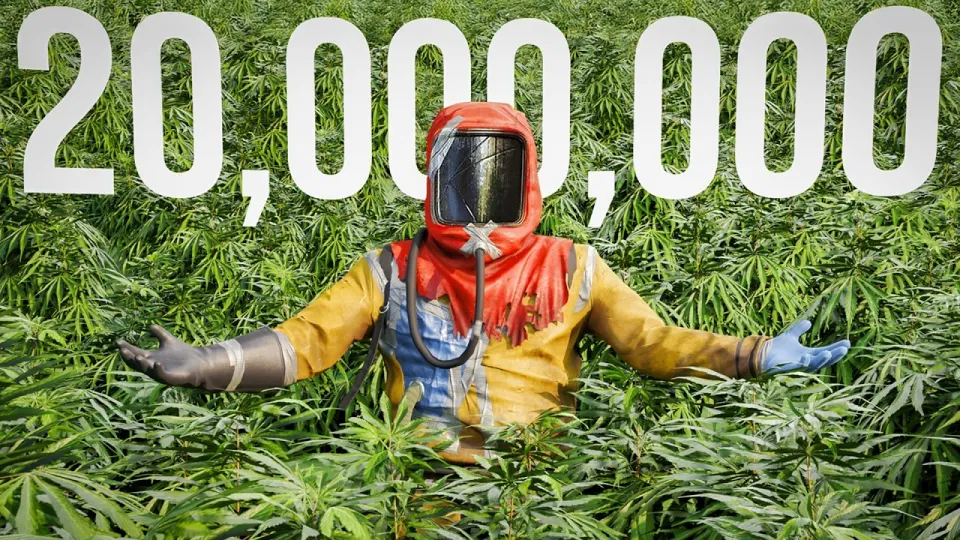
Video: I Became Rust's #1 Farmer...
You can order the same kind of articles for your own video to boost it on YouTube and Google. Just message the Telegram bot @sat_sit_bot. Articles with your video embedded are written and posted by the bot itself — on popular topical sites (no ads). Try it free: 50 articles on us.
· based on the channel JTeles
Key takeaways
- JTeles started the wipe with 126,000 cloth and set a target of 20,000,000 cloth within 7 days.
- The plan required the biggest cloth farm built on the server, staffed partly by viewers invited onto the map.
- A large Russian clan learned about the project and spent the wipe trying to stop it, producing raids and base defense fights.
- Cloth comes from hemp plants, and large-scale hemp farming is one of the most space- and labour-hungry activities in Rust.
- The finished compound grew so large that rendering it visibly lagged the server for players looking at it.
Rust cloth farming is the practice of growing hemp in bulk and turning the harvest into cloth, and one creator turned it into a server-wide race: JTeles started a wipe with 126,000 cloth and pushed toward 20,000,000 in seven days, inviting viewers onto the server to build the biggest cloth farm in Rust. The attempt drew a large Russian clan that tried to shut the project down, so the run became a mix of farming, PvP, raids and base defense. The full breakdown is on the JTeles channel, and the video's sponsor link, the War Thunder sign-up bonus for PC and console, is where the creator sends viewers first.
What the 20,000,000 cloth challenge actually involved
The goal was simple to state and brutal to execute: convert a starting stock of 126,000 cloth into 20,000,000 cloth inside a single wipe, a window of roughly seven days before the server resets. Cloth in Rust comes from hemp plants, which yield cloth directly when harvested, so the only route to eight figures is industrial-scale farming rather than looting.
Doing the math shows the scale. Reaching 20 million from 126,000 means producing close to 19.9 million cloth, or roughly 2.8 million per day across a week. A single hemp plant gives a modest handful of cloth per harvest, so the operation depends on hundreds of planter boxes or a very large planted field, constant watering, and a team that can plant and harvest around the clock. That is why the challenge is less about one player's stamina and more about logistics: seed supply, fertilizer, storage, and the manpower to keep cycles running while the owner sleeps.
Why cloth is harder to mass-produce than it looks
Cloth is a low-tier resource with high-tier demands, because almost everything downstream of it eats volume. Bandages, clothing, and the cloth component of many crafting recipes mean a clan can burn through thousands of units in a single fight, and hemp farming competes for the same base space as furnaces, boxes and defenses.
- Space: planters and growing plots consume footprint that a big clan otherwise wants for loot rooms and turrets.
- Water and upkeep: large farms need a steady water supply and constant attention, or crops stall.
- Labour: planting and harvesting is repetitive manual work, and the harvest-all and plant-all conveniences still leave transport and sorting to players.
- Visibility: a farm the size of a small town is impossible to hide, which turns a resource project into a target.
That last point is what makes the 20 million figure notable. A normal clan farm is a side room; a farm built to produce millions of cloth per day becomes the most conspicuous structure on the map.
How viewers became the workforce
A solo player cannot run a seven-day industrial farm, so the project was opened up: viewers were invited onto the server to help plant, harvest, haul and defend. That turns an audience into a clan, with the usual problems of a clan — scheduling, trust, and coverage during offline hours.
Coverage is the critical variable. Rust servers keep running while a player is offline, and an undefended farm full of cloth is the best possible raid target. The project therefore needed people online at odd hours, which is exactly the role the wider group ended up playing: holding the compound while the main farmer slept, then handing the operation back. For anyone attempting something similar, the practical lesson is that recruitment and shift planning matter as much as the planters themselves.
The clan war that turned farming into PvP
Building the biggest farm on a server is a public statement, and it attracted a response. A large Russian clan found out what was being attempted and worked to stop it, which shifted the project from agriculture to territorial conflict: raids on the compound, defense of the base, opportunistic PvP, and alliances formed to balance the fight.
This is the part of the story that separates a farm challenge from a simple grind. On a populated Rust server, resources are political. A group producing millions of cloth per day can trade it for scrap, guns, sulfur or favours, so denying that production is worth a raid even if the attackers do not care about cloth. The defending side has to treat the farm as a military asset: layered walls, turrets, secure storage spread across multiple rooms, and a roster of players who can respond when a raid alarm fires.
What the finished compound looked like
By the end of the wipe the base had grown into a sprawling, heavily built-up complex rather than a single farm building. The scale had a side effect familiar to anyone who has overbuilt in Rust: looking at the whole compound caused visible lag, because so many structures and entities had to be rendered and tracked at once.
That detail is a useful benchmark. Server performance in Rust degrades with entity count, and a farm with hundreds of planters plus the boxes, lights and defenses around them pushes a server hard. It also signals how much of the map's build budget one project can absorb — a compound that lags the server is a compound that has effectively claimed a region.
Typical questions from players watching the run
Viewers who follow large-scale Rust projects tend to ask the same practical things, and the answers apply to any ambitious farm:
- How long does a build like this take? The challenge was framed around seven days, which is a full wipe cycle on a weekly server; the farm itself was raised over several days while production continued.
- Do you need a clan? For 20 million cloth, yes. Even with help, the main farmer's own playtime was extreme, and the group covered the offline hours.
- How do you stop it being raided? You do not stop it entirely; you make it expensive and you keep people online. The project's defenders were as important as its farmers.
- Is it worth it economically? Cloth is cheap per unit but valuable in bulk, and the real return is trading leverage rather than raw scrap.
All the links from the video
- War Thunder free sign-up for PC and consoles
- War Thunder mobile link
- JTeles Discord
- JTeles on Twitter/X
- JTeles on TikTok
The takeaway from Rust's biggest cloth farm
Turning 126,000 cloth into 20,000,000 in one wipe is a logistics problem disguised as a farming video: it needs planter capacity, water, a volunteer workforce and a defense plan that survives the night. The project also shows how quickly a resource operation becomes a conflict, because a farm that large is a strategic target whether or not its owners want a fight. The compound's sheer size, enough to lag the server on sight, is the clearest evidence of how far the build went. JTeles documented the whole run, from the first harvest to the clan war, and the War Thunder registration bonus is the sponsor offer attached to it.
Questions & answers
How much cloth do you need to become Rust's top farmer?
In this run the target was 20,000,000 cloth starting from 126,000, all produced within a single weekly wipe. That works out to roughly 2.8 million cloth per day. The number is far beyond a normal clan farm and requires hundreds of planters plus a rotating workforce.
Can one player farm 20 million cloth alone in Rust?
Practically no. Hemp farming is repetitive manual work, and a weekly wipe only gives seven days. The project relied on viewers joining the server to plant, harvest, haul and defend, which also covered the hours when the main farmer was offline.
Why would a clan raid a cloth farm?
Because bulk cloth is tradeable value. Millions of units can be exchanged for scrap, weapons or sulfur, and denying that production hurts the owners. A large compound full of resources is also an obvious, visible target, which is why the project turned into raids and base defense.
Does a huge farm affect Rust server performance?
Yes. Every planter, box, light and wall adds entities the server and clients must track. In this build the finished compound was large enough that looking at it caused noticeable lag, which is a common problem for very large bases on populated servers.
Source: I Became Rust's #1 Farmer... · Markdown version