Valorant Lowest To Highest Rank Challenge Explained
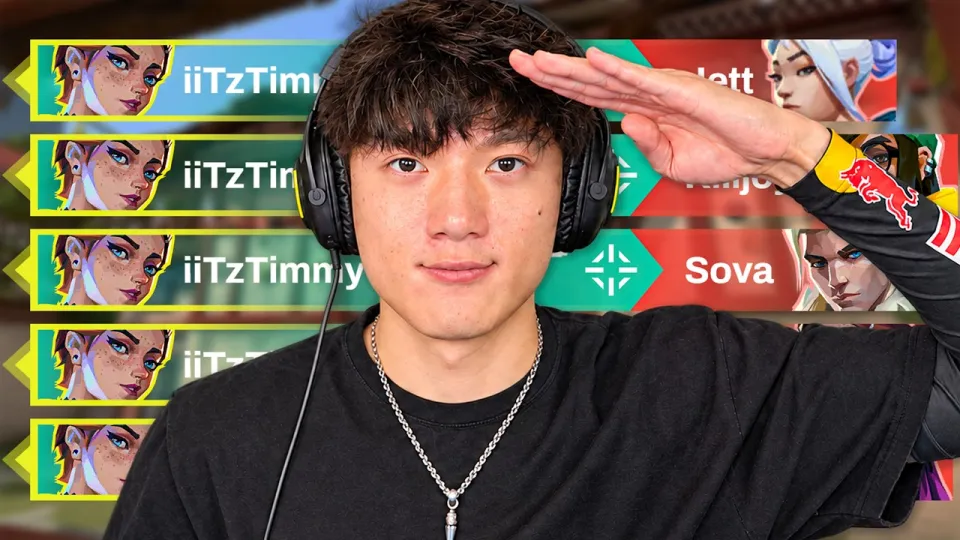
Video: I Might Be Getting TOO Good at Valorant… (Lowest To Highest Rank Challenge)
You can order the same kind of articles for your own video to boost it on YouTube and Google. Just message the Telegram bot @sat_sit_bot. Articles with your video embedded are written and posted by the bot itself — on popular topical sites (no ads). Try it free: 50 articles on us.
· based on the channel iiTzTimmy Two
Key takeaways
- The challenge format: start from the bottom of the Valorant ranked ladder and climb as far as possible, one rank tier at a time.
- iiTzTimmy Two is the channel behind the run, with the full stream available at twitch.tv/iiTzTimmy.
- Low-elo games are decided less by aim than by communication, tilt control and basic site discipline.
- A Cypher player in the opening match blamed teammates and invented callouts, becoming the video's main example of bad mental.
- Second lobby opponents played noticeably more desperate and coordinated once they recognised a high-level player in the match.
Valorant is Riot Games' free-to-play 5v5 tactical shooter, and the lowest-to-highest rank challenge is a format where a strong player starts from the bottom of the ranked ladder and climbs as far as possible. In the iiTzTimmy Two video, that climb doubles as a diagnostic: low-elo lobbies reveal how much of Valorant is decided by comms, mental and discipline rather than raw aim. The run was streamed live, and the full session is available on iiTzTimmy's Twitch channel.
How the lowest to highest rank challenge works in Valorant
The format is simple to describe and brutal to execute: a player begins at the very bottom of the competitive ladder and grinds upward, treating every rank tier as a checkpoint. Valorant's ranked system places players into Iron, Bronze, Silver, Gold, Platinum, Diamond, Ascendant, Immortal and finally Radiant, and each tier has three divisions except Radiant, which is a leaderboard rather than a fixed division. A lowest-to-highest run means winning enough matches to pass through all of them.
The difficulty is not the opponents' aim. At the bottom of the ladder, players miss shots, hold odd angles and rotate late, so a mechanically gifted player can win duels almost at will. What slows the climb is everything around the duels: teammates who do not trade, rounds lost to a single overextend, and the occasional match where one player's attitude collapses the whole team. That is why the challenge is usually framed as a mental test rather than a shooting test.
What low-elo Valorant lobbies actually expose
The opening match in the video is a case study in how a ranked game falls apart before anyone loses a gunfight. A Cypher on the team plays first into site, dies, and then spends the rest of the round criticising teammates — including complaining about callouts he never received and, at one point, reacting to a callout that was never actually made. Viewers picked up on it immediately, and the clip became the most-discussed moment of the upload.
The pattern is familiar to anyone who has played ranked:
- A player takes an aggressive position without support.
- The position fails and the round is lost.
- The player reviews the round out loud, assigning blame outward.
- Team voice chat degrades, and the next three rounds are played with less information than the first.
Valorant gives teams a huge amount of information through voice comms — enemy positions, utility usage, economy status. A player who fills that channel with complaints effectively removes it as a tool. The lesson from the lobby is not that Cypher is a weak agent; it is that a single tilted teammate can cost more rounds than a bad aim day.
Why the second lobby felt completely different
The second match flips the tone. Once opponents realise they are sharing a server with a well-known high-rank player, the game becomes a spectacle: enemies push harder, peek wider and treat every duel as a highlight opportunity. Commenters noticed the desperation, and it changes the texture of the climb — instead of passive low-elo rounds, you get over-aggressive peeks and chaotic site executes.
That shift matters for anyone attempting the same challenge. Low-elo players are not uniformly bad; they are inconsistent. One lobby can be silent and disorganised, the next can feature players who hit every flick because they are fully warmed up and treating the match as a test. A climbing player has to adapt to both without changing their own fundamentals.
Mechanics that decide rounds more than rank does
Several small mechanical details separate a clean climb from a slow one, and they show up repeatedly across the run. First, crosshair placement and pre-aim decide most duels before a shot is fired; at low ranks, enemies hold predictable angles, so holding the right line wins rounds. Second, utility usage — smokes, flashes, recon — is what converts a duel win into a site take. Third, economy discipline keeps rifles in hand across rounds instead of forcing every other round.
There is also the question of settings and hardware. Viewers routinely ask about sensitivity, DPI and frame rate, and the honest answer is that a smooth, high-refresh setup removes variables but does not replace decision-making. A player on a modest PC who trades properly and communicates will climb faster than a player with top-tier hardware who solo-peeks every round.
Reading the climb like a ranked player
The most transferable takeaway from the run is how to diagnose your own games. Ask three questions after every loss:
- Did I die first without a trade available?
- Did my team have the information to play the round correctly?
- Did I change anything after the third lost round, or repeat the same setup?
If the answer to the first question is yes more than twice in a match, the problem is positioning, not aim. If the second is no, the problem is comms. If the third is no, the problem is adaptation. Those three failure modes account for most of what keeps players stuck in Iron through Gold, and they are exactly what a high-rank player exploits on the way up.
Useful links
- Watch iiTzTimmy live on Twitch — full streams, including ranked climbs
- iiTzTimmy on Twitter
- iiTzTimmy on Instagram
- iiTzTimmy on TikTok
- iiTzTimmy Discord community
Final thoughts on the Valorant rank climb
The lowest-to-highest rank challenge is entertaining because it strips Valorant down to its essentials: aim gets you out of Iron, but comms, discipline and mental carry you through the middle of the ladder. The video's most instructive moments are not the highlight flicks but the rounds where a teammate's attitude costs the team more than any missed shot. If you want to replicate the format, treat every rank tier as a checkpoint and review your own first deaths before blaming the lobby. The run comes from iiTzTimmy Two, and the live version — including the full unedited climb — is on Twitch.
Questions & answers
What is the lowest to highest rank challenge in Valorant?
It is a self-imposed format where a strong player starts at the bottom of the ranked ladder — Iron — and wins enough matches to climb through Bronze, Silver, Gold, Platinum, Diamond, Ascendant and Immortal toward Radiant. The point is to see how far one player can carry a series of random lobbies, and how much of the climb depends on teammates rather than individual skill.
Why do low-elo Valorant games feel harder than high-rank ones?
They are less predictable. Low-rank players rotate late, hold unusual angles and often skip communication, so standard reads do not apply. On top of that, one tilted teammate can remove voice comms from the round entirely, which costs more than any individual aim disadvantage.
Does better hardware or a higher frame rate help you climb?
It helps at the margins. A stable high-refresh setup makes flicking and tracking more consistent, but the biggest gains in low elo come from crosshair placement, trading teammates and using utility to take space. A player with average hardware and good discipline will out-climb one with a top-tier PC who solo-peeks every round.
What sensitivity and DPI should a climbing player use?
There is no universal answer — most competitive players settle somewhere in a moderate range and then stop changing it. The important part is consistency: pick a sensitivity that lets you turn roughly 180 degrees with one comfortable swipe and keep it fixed for weeks so your muscle memory can develop.
Source: I Might Be Getting TOO Good at Valorant… (Lowest To Highest Rank Challenge) · Markdown version